Best Mediterranean Food San Diego
Shawarma House is a family-run Iraqi-Mediterranean restaurant in Ocean Beach, San Diego. We serve halal-sourced beef and chicken shawarma, grilled beef kebab and shish tawook, falafel, vegan options, and house-made sauces at 4884 Newport Avenue. We are open daily from 11 AM to 8 PM.
What makes our Mediterranean food different
Our food starts with family recipes carried from Iraq and prepared for a neighborhood restaurant in Ocean Beach. Chicken and beef shawarma roast slowly on vertical spits and are shaved to order. Beef kebab and shish tawook are grilled. Toum, tahini, and hot sauce are made in-house daily.
That combination makes Shawarma House more specific than a generic “Mediterranean” label: Iraqi roots, a San Diego beach-neighborhood home, halal-sourced meats, and signature dishes that regulars come back for.
Three signatures to know
Slow-roasted shawarma
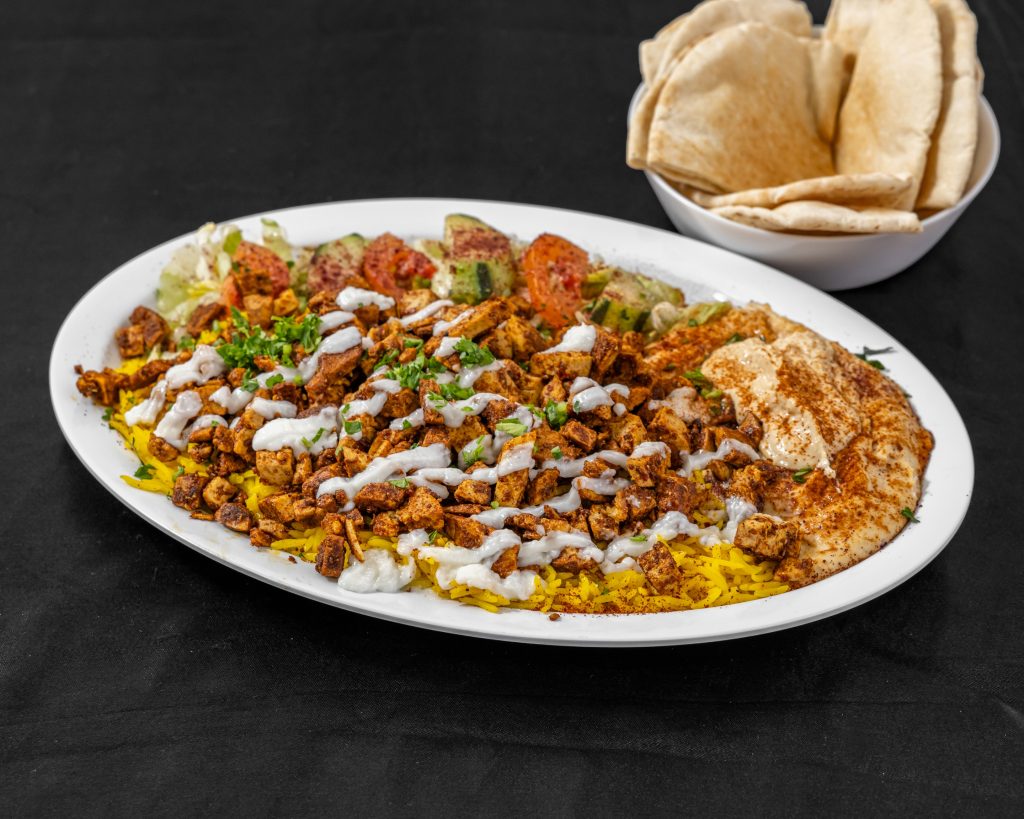
Choose chicken, beef, or the Combo Plate when you want more than one spit-roasted protein. Plates are a straightforward first visit: protein, rice, salad, hummus, and pita.
Cream Chop
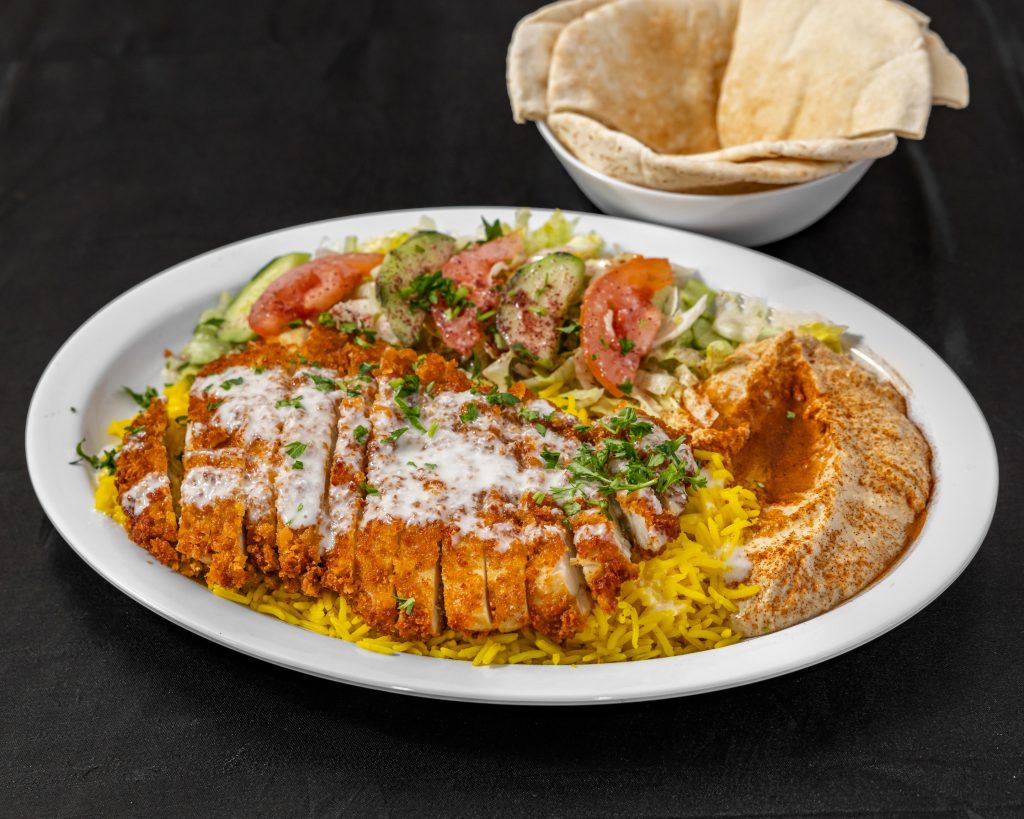
Cream Chop is one of the dishes that separates our menu from a standard shawarma shop. It is a comforting Iraqi-Mediterranean favorite available as a plate, pita wrap, fries, and a vegan version.
Family Tray
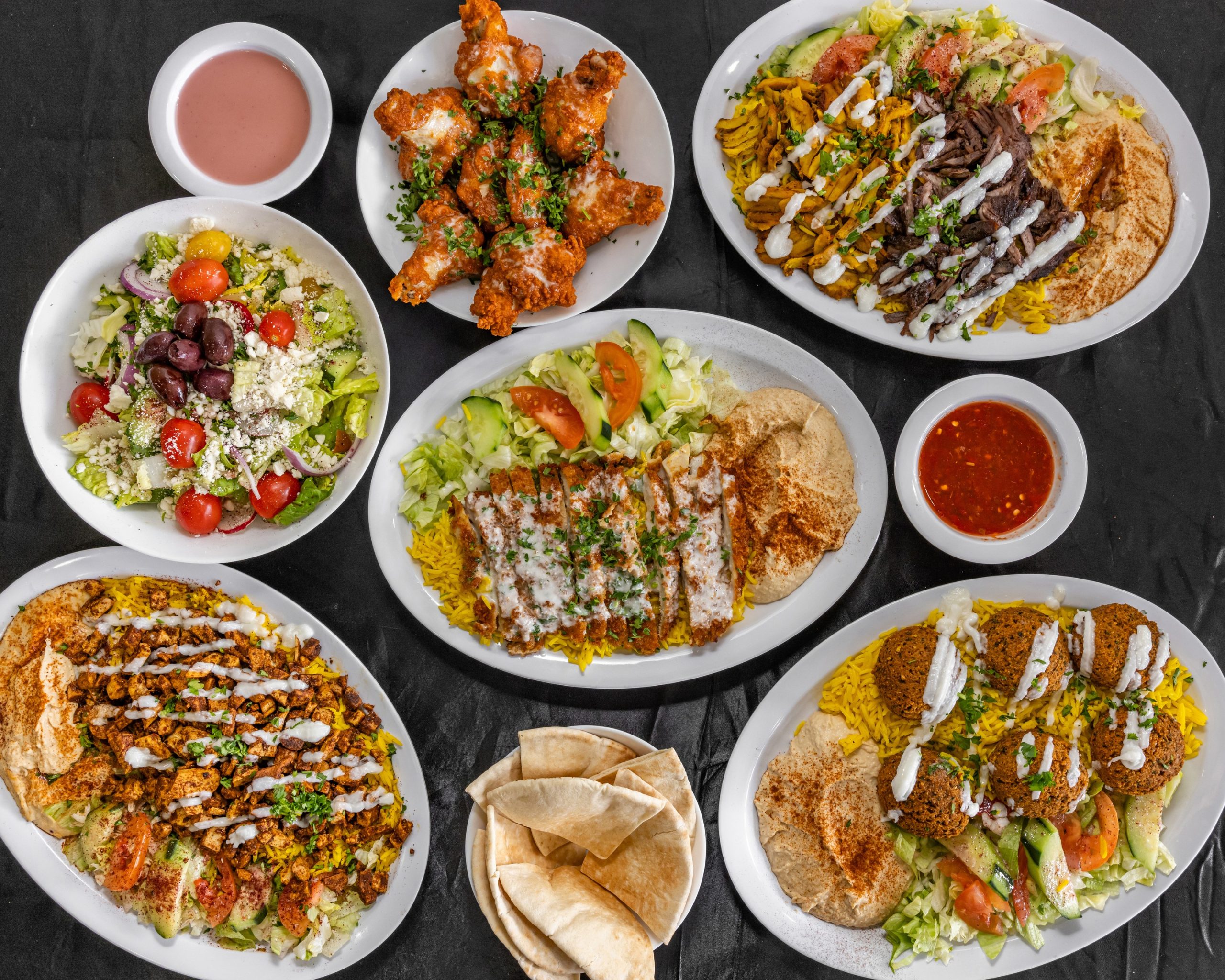
The Family Tray feeds 7–10 with beef and chicken shawarma, chicken cream chop, falafel, rice, salads, hummus, and pita. It works for family dinner or a small office lunch without building a large catering order.
What to order on a first visit
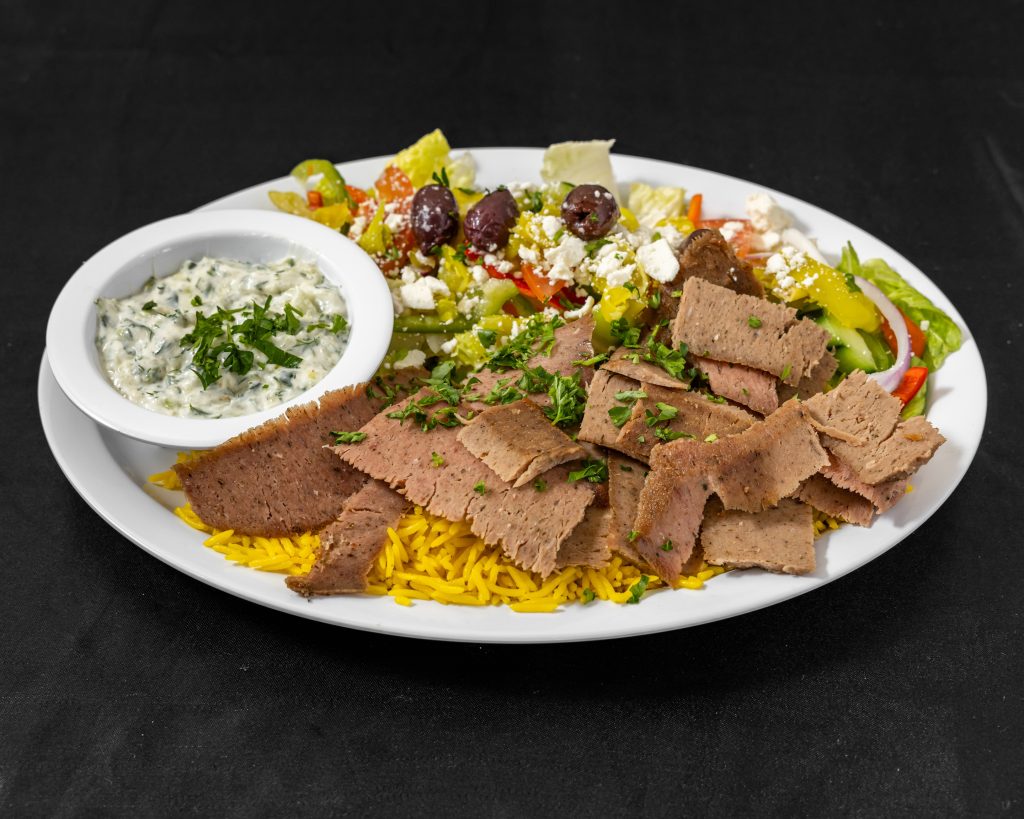
- Combo Plate: beef shawarma, chicken shawarma, and gyro when you want to sample the menu.
- Chicken or Beef Shawarma Plate: the classic slow-roasted option with rice, salad, hummus, and pita.
- Cream Chop Plate: the signature comfort-food choice.
- Falafel Plate or Vegan Shawarma Plate: plant-based options that still eat like a full meal.
- Family Tray: the simplest choice for 7–10 people sharing dinner or lunch.
Halal, vegan, and gluten-conscious choices
Our beef and chicken are halal-sourced. The menu also includes falafel, vegan shawarma, vegan Cream Chop, salads, hummus, and other plant-based choices. Many plates can be built without pita, but our kitchen is shared, so we describe those choices as gluten-free-friendly rather than certified gluten-free.
Ocean Beach location and San Diego catering
Visit us at 4884 Newport Avenue in Ocean Beach, a short walk from the OB Pier. We serve dine-in, pickup, delivery, and direct online ordering every day from 11 AM to 8 PM.
For offices, meetings, weddings, parties, and other events, Shawarma House offers trays, boxed lunches, staffed service, and recurring office-lunch options across San Diego. The catering hub shows current packages, service details, dietary guidance, and the quote form.
Our Most Popular Dishes