Skip the wait — pickup or delivery
Plate vs. wrap is a real decision. Here’s what’s on the plate.
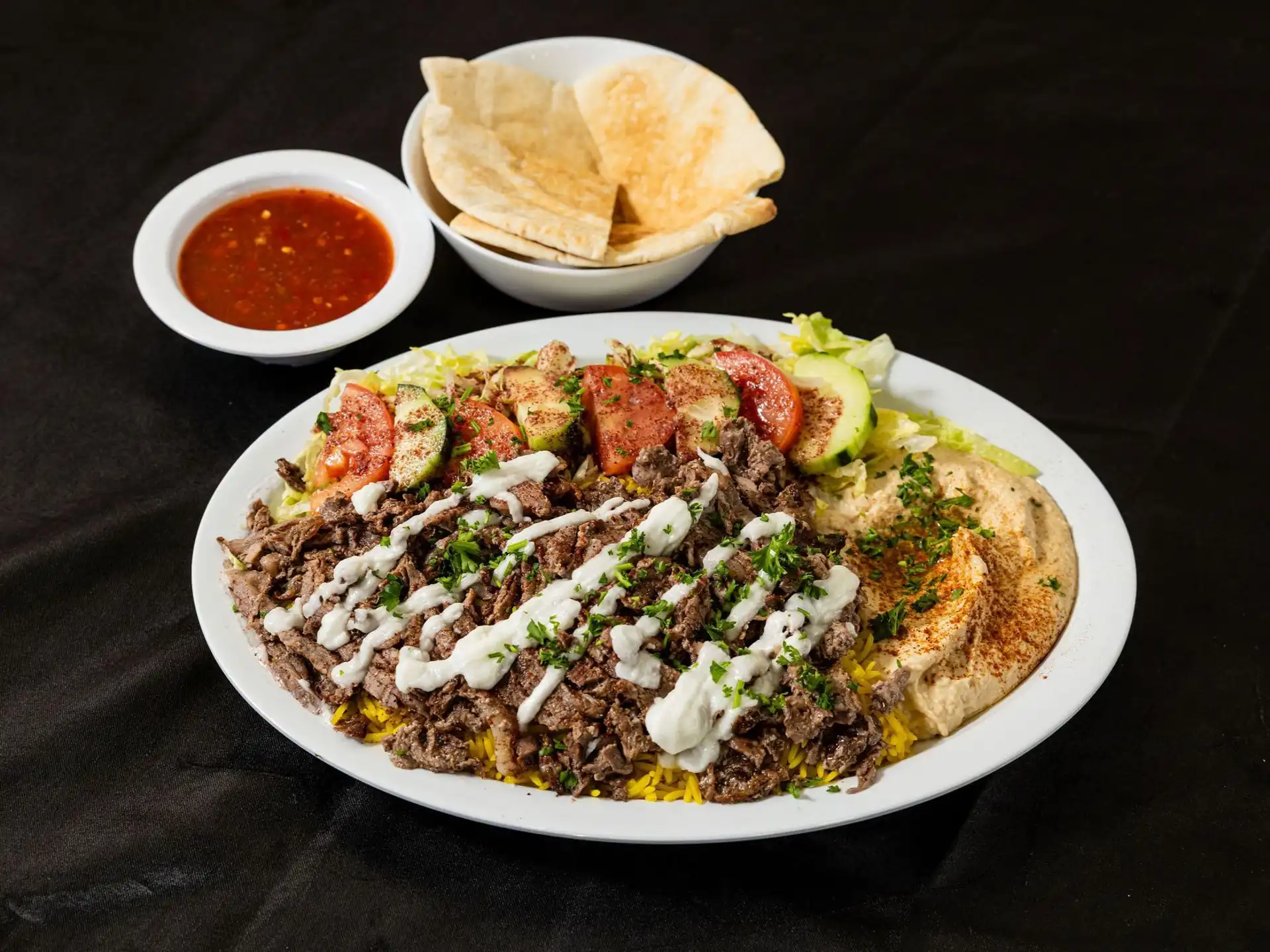
The beef shawarma plate, deconstructed — what comes on it and why each thing is there.
When you order beef shawarma in San Diego, you’re choosing between two formats: the plate and the pita wrap. They taste different. They feel different. Most people order both eventually but pick a favorite. This page is about the plate — what’s actually on it, why each component is there, and how to think about it.
What’s on the plate
A plate at Shawarma House SD is built the same way every time:
- Slow-roasted beef shawarma — the centerpiece. Marinated overnight, stacked on a vertical spit, roasted for hours, hand-shaved to order. About a half-pound of meat lands on the plate, depending on the day’s spit.
- Seasoned yellow rice — cooked with turmeric, cumin, and a touch of bay leaf. The rice exists to soak up the meat juices and the sauce, which is most of what it does.
- Fresh salad — chopped tomato, cucumber, red onion, parsley, lemon juice, olive oil. The acid here is doing real work — it cuts the richness of the meat and resets your palate between bites.
- House-made hummus — chickpeas, tahini, garlic, lemon, olive oil. We make it in the morning, in the kitchen, in batches. It’s not from a tub.
- House-made garlic sauce (toum) — fluffy, white, made daily from fresh garlic emulsified with oil and lemon. The right garlic sauce on beef shawarma is what completes the dish.
- Warm pita — for scooping, wrapping, or tearing.
Why the plate over the wrap
The plate gives you control. You can taste the meat clean, then taste it with garlic sauce, then taste it pulled into pita with a forkful of salad — and the proportions are yours to adjust. The wrap commits you to one combination. Both are great, but the plate is the more honest meal.
Travels well, reheats well
A lot of beef shawarma plates leave our kitchen as takeout. A few notes if you’re planning to eat it at home: keep the salad and the sauces packed separately from the rice and meat. Reheat just the meat and rice in a pan with a splash of water (covered, low heat — don’t microwave the meat if you can avoid it; it dries out fast). Add the salad, hummus, and garlic sauce after reheating, not before.
How to order it
Order through the ORDER DIRECT button at the top of this page (pickup or delivery). The plate is on the menu under Plates, both as a single order and as part of the family combo.
Frequently asked questions
How much beef comes on the plate?
Beef Shawarma Plate: Depth, Balance, and Controlled Richness
The beef shawarma plate is built around patience rather than speed. It is not a dish designed to overwhelm with size or spice, but one that delivers depth through marination, slow roasting, and careful assembly. Every component on the plate exists to support the beef, not distract from it, making the experience cohesive rather than chaotic.
At the center of the beef shawarma plate is thin-sliced beef that has been marinated, stacked, and cooked until tender with lightly crisped edges. Rice, salad, hummus, sauces, and pita work together as a system, producing a meal that feels complete without excess. This balance is what makes the dish enduring rather than trend-driven.
The Beef as the Anchor
The success of a beef shawarma plate begins and ends with the beef itself. Without proper preparation, no amount of sides or sauce can compensate.
Marination and Layered Flavor
To make beef shawarma properly, time is non-negotiable. The process to make beef shawarma relies on marination that penetrates rather than coats. Spices and aromatics work gradually, softening the meat and building depth instead of surface intensity. This approach creates beef that tastes integrated rather than seasoned as an afterthought.
In a well-executed beef shawarma plate, every slice carries consistent flavor from edge to center.
Cooking for Texture and Contrast
Shawarma cooking is about controlled heat. The exterior develops light char while the interior remains tender and juicy. Overcooking dries the meat; undercooking leaves it flat. The beef shawarma plate depends on hitting that narrow window consistently.
The Plate as a System
A beef shawarma plate is not simply beef with sides. It is a composed structure where each element plays a defined role.
Rice and Structural Balance
Rice beneath the beef absorbs juices and moderates spice. Properly seasoned rice enhances the dish without drawing attention to itself. In the beef shawarma plate, rice provides foundation, not filler.
Portion control matters here. Too much rice buries the beef, while too little leaves the plate feeling incomplete.
Salad and Acidity
Fresh salad elements—lettuce, cucumbers, and tomatoes—introduce crunch and acidity. Their role is corrective. In the beef shawarma plate, salad resets the palate and keeps richness from becoming fatigue.
Sauce, Bread, and Control
Sauces and pita change how the plate is eaten. They are functional, not decorative.
Pita allows diners to scoop, wrap, or combine components as they choose. This flexibility turns the beef shawarma plate into an interactive meal rather than a fixed sequence of bites.
Freshness is critical. Warm, pliable pita supports the dish; stale bread undermines it immediately.
Garlic sauce, hot sauce, and cooling elements are served on the side for a reason. Over-saucing hides mistakes. A confident beef shawarma plate lets the beef remain visible and central.
How This Dish Is Meant to Be Eaten
Understanding beef shawarma how to serve clarifies why the plate format works. The dish is designed for rotation—beef first, then rice, then salad, then sauce—rather than repetition. This approach mirrors shawarma how to serve beef traditionally: layered, flexible, and paced.
Some diners approach the plate like an easy beef shawarma bowl, while others build pita bites gradually. Both approaches work because the structure supports them.
Consistency as a Benchmark
A beef shawarma plate exposes inconsistency instantly. Dry beef, bland rice, or careless assembly stand out immediately. When executed well, the dish becomes a benchmark for the entire menu.
Satisfaction Without Excess
Despite its richness, the beef shawarma plate satisfies without heaviness. Balanced portions and fresh elements allow diners to finish comfortably rather than overfull, encouraging repeat orders instead of one-time indulgence.
Reputation and Where to Order
The execution of the beef shawarma plate is reflected in customer feedback across platforms. Reviews on Yelp and visibility on Google highlight consistency and reliability.
Updates and community engagement can be found on Instagram, while direct ordering for pickup is available through Toast.
The beef shawarma plate remains a defining item—structured, balanced, and built for diners who value depth over excess.